
 Cart is empty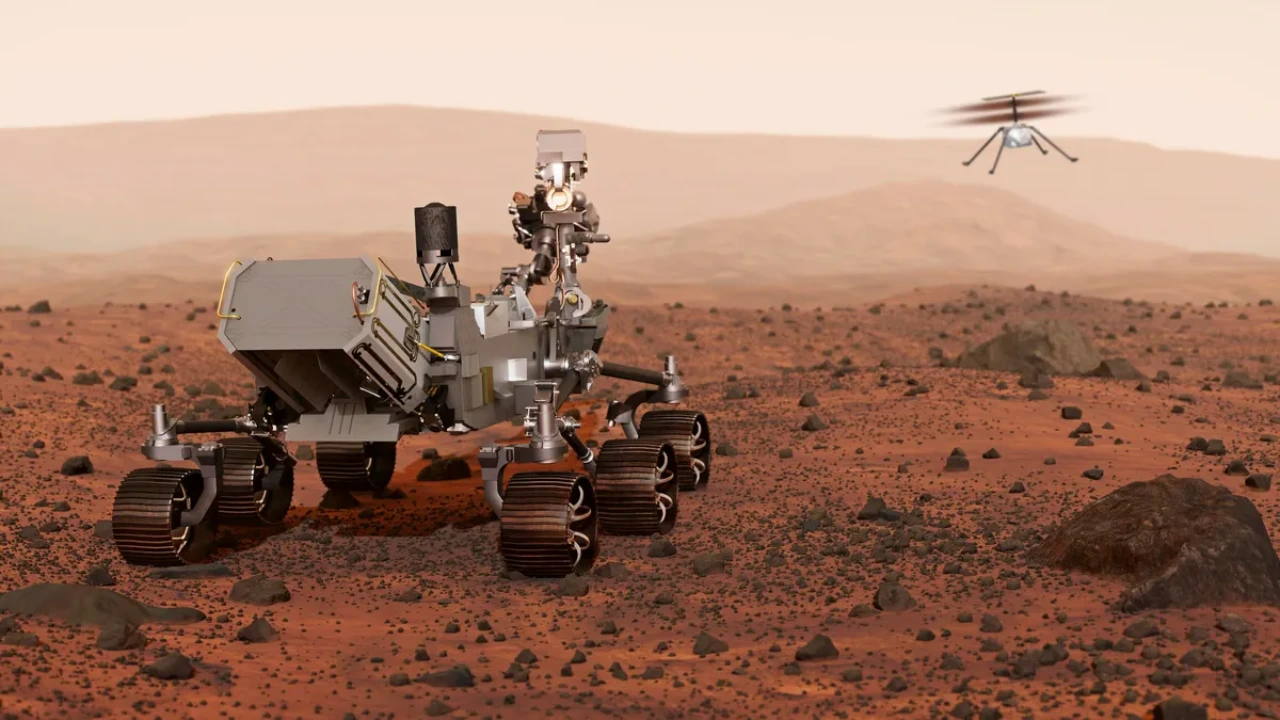

 WhatsApp Group
A Breakthrough on the Red Planet
NASA has confirmed that its Perseverance rover made one of its most important discoveries on Mars. In 2024, the rover drilled a rock sample from the Bright Angel formation in Jezero Crater. This rock, believed to be over 3 billion years old, has now given scientists fresh clues about the possibility of ancient life on Mars.
What the Rock Reveals
The sample, called Sapphire Canyon, is a reddish, clay-rich mudstone formed by ancient water sediments. Inside the rock, scientists found unusual textures known as “leopard spots” and tiny mineral nodules. These features are rich in vivianite and greigite—minerals that, on Earth, are often linked to microbial activity.
Organic Material Detected
Along with the mineral evidence, the rover also detected organic carbon within the rock. Organic compounds are the basic building blocks of life, and their presence makes this discovery even more significant.
What It Could Mean
NASA scientists describe these findings as “potential biosignatures.” This means the patterns and minerals could be signs of ancient microbes, but they might also have formed through natural chemical reactions. More research is needed to be sure.
The Next Step
To confirm whether life once existed on Mars, the sample will eventually need to be brought back to Earth for detailed study. This is planned under the Mars Sample Return mission, though the timeline remains uncertain due to budget and technical challenges.
Why This Matters
This discovery is being called the closest evidence yet of possible life on Mars. While not final proof, it gives scientists a powerful reason to continue exploring and testing Mars’ ancient rocks.


 By
By