 Cart is empty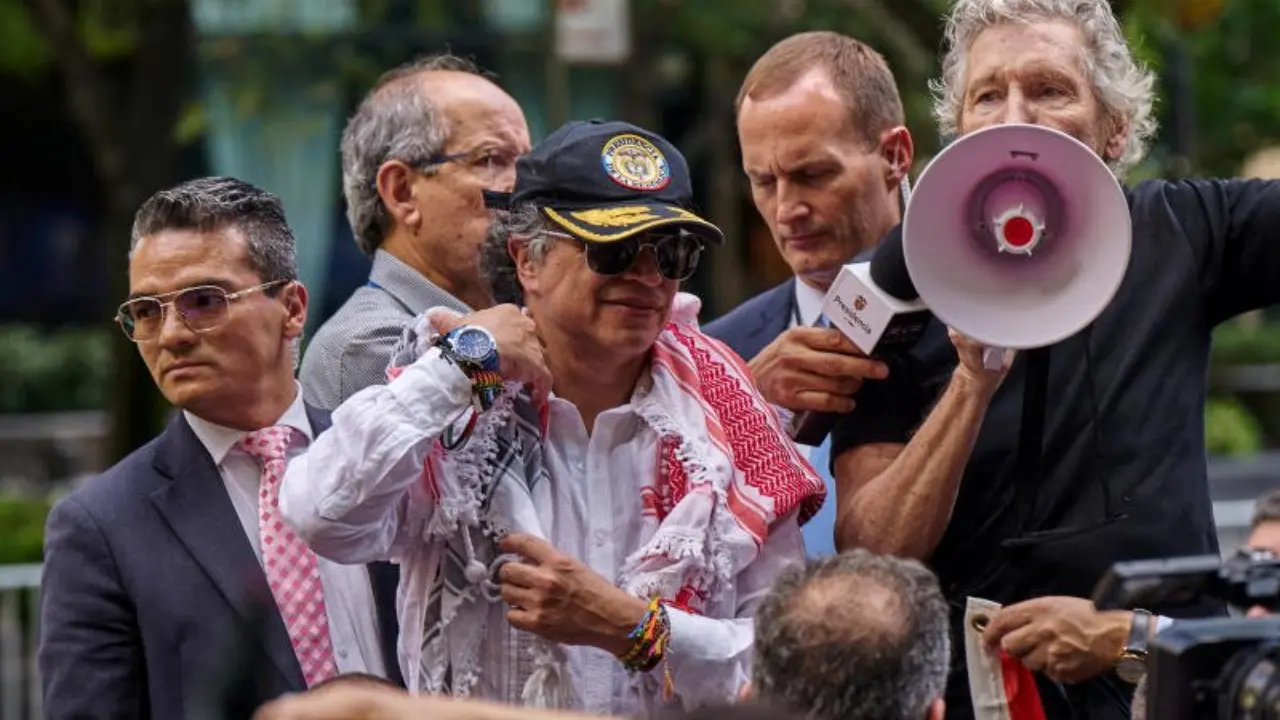

 WhatsApp Group
The United States is reportedly preparing to revoke Colombian President Gustavo Petro’s visa after his controversial comments at a pro-Palestinian gathering. The move, if confirmed, could spark a major diplomatic dispute between Colombia and the U.S., testing the strength of one of Washington’s closest alliances in Latin America.
Petro’s Pro-Palestinian Remarks
During a recent speech, Gustavo Petro voiced strong support for the Palestinian cause, condemning Israel’s actions in Gaza and accusing the West, including the U.S. government, of enabling “systematic aggression.” He urged other Latin American leaders to adopt a tougher stance on the Israel-Palestine conflict, a position that drew immediate criticism in Washington.
Petro described the situation in Gaza as an “unjust war” and aligned himself openly with pro-Palestinian movements. His statements were seen by U.S. officials as inflammatory remarks that could undermine efforts to maintain regional stability.
U.S. Reaction and Visa Threat
Reports from Washington suggest that revoking Petro’s U.S. visa is under serious consideration. While the Biden administration has not released an official confirmation, diplomatic insiders say the issue is being actively debated within the U.S. State Department.
If the visa is revoked, it would be an unprecedented move against a sitting Colombian head of state, signaling the depth of U.S. dissatisfaction with Petro’s stance on Israel and Palestine.
Diplomatic and Regional Impact
The potential decision could have wide-reaching consequences. Colombia has long been regarded as a key U.S. ally in Latin America, with close cooperation on trade, defense, and anti-narcotics operations. Analysts warn that escalating this dispute may weaken U.S.-Colombia relations at a time when Washington is competing with China and Russia for influence in the region.
Many Latin American countries have shown growing support for the Palestinian people, and Petro’s comments resonate strongly with pro-Palestinian voices across the region. However, critics argue his approach risks isolating Colombia internationally, especially from the United States and its Western allies.
Petro’s Response
Responding to the speculation, President Petro defended his remarks, insisting that Colombia’s foreign policy will not be dictated by external powers. “I will never remain silent in the face of injustice,” he said, reinforcing his alignment with the Palestinian struggle.
His supporters hail him as a defender of human rights, while opponents accuse him of jeopardizing Colombia’s international partnerships for political grandstanding.
What Comes Next?
As tensions rise, observers note that any U.S. decision on Petro’s visa could set a precedent in Latin American diplomacy. The coming weeks will reveal whether both sides seek to de-escalate tensions or if this episode will mark the start of a deeper diplomatic rift between Washington and Bogotá.


 By
By